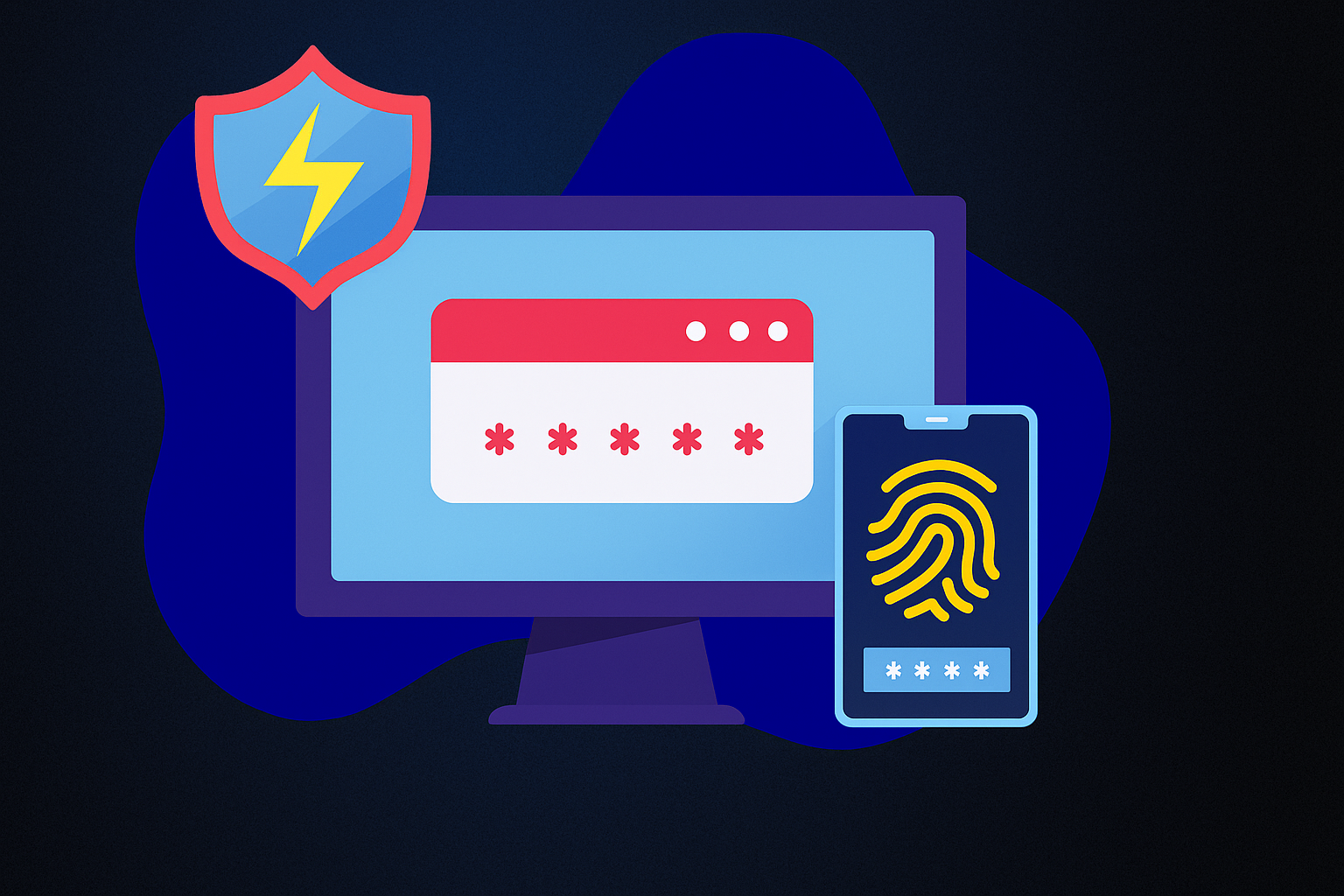
Multi-factor authentication has quickly become one of the most effective tools in cybersecurity. It stops the majority of credential-based attacks, reduces the impact of password breaches, and makes it significantly harder for cybercriminals to impersonate legitimate users. But even the strongest first line of defense has its limits. There will always be cases where attackers evolve, find workarounds, and manage to slip through.
So, what happens when we become the one percent? What happens when MFA fails? The answer is preparation, and that starts with Managed Detection and Response.
When MFA Is Not Enough
MFA dramatically reduces your risk, but it does not completely eliminate it. Attackers have discovered creative ways to bypass it, often by targeting the human rather than the technology.
They may send fake MFA prompts, hoping someone approves a request by accident. They may use phishing websites that capture both passwords and MFA codes in real time. They may compromise a trusted device or trick someone into sharing a temporary access code.
While MFA blocks most of these attempts, any system that relies on human behavior is never completely foolproof. And when cybercriminals finally find that one chance to slip through, the consequences can be severe unless you have a second line of defense waiting behind the first.
This is where Managed Detection and Response becomes essential.
MDR: The Shield Behind Your First Line of Defense
If MFA is your front door lock, MDR is the security guard watching the entire property. MFA prevents attackers from walking in easily, but MDR watches for anyone sneaking around the perimeter, climbing the fence, or trying to move through your systems unnoticed.
MDR, or Managed Detection and Response, is designed to step in the moment something suspicious occurs. It does not wait for an attack to fully unfold. It reacts in real time.
It is called the shield to the sword of MFA for a reason. While MFA is proactive, MDR is both proactive and reactive. It monitors, detects, and responds the instant a threat appears. This makes it one of the most important layers in a modern cybersecurity defense plan.
How MDR Works Behind the Scenes
Traditional security tools often rely on alerts that occur only after a threat has already entered your environment. MDR works through continuous monitoring by a dedicated security team (real people actively watching your systems) combined with advanced threat intelligence, behavioral analytics, and pattern recognition to detect and isolate unusual activity the moment it begins.
When suspicious activity is detected, MDR immediately investigates and confirms whether it poses a real threat. If malicious behavior is found, it is contained and stopped while your MDR team responds to the incident in real time.
This type of 24/7 round-the-clock monitoring helps prevent small issues from turning into major incidents. The result is reduced impact, protected data, and operations that keep running smoothly.
Why MDR Makes Such a Big Difference
Because MDR’s response is immediate, it offers significant advantages that traditional tools alone cannot match, such as:
- Enhanced security
- Faster detection of unknown or emerging threats
- Reduced risk of ransomware, insider misuse, and credential-based attacks
- Rapid containment to stop threats before they spread
- Compliance support with detailed reporting and auditing
In environments where MFA may occasionally fail, MDR becomes the critical safety net. It ensures that even if attackers get past your front line, they cannot move far, and they certainly cannot move silently.
Why MDR Is Essential for Modern Cyber Defense
Cyber attacks no longer look the way they used to. Attackers are faster, smarter, and more willing to target weaknesses that businesses do not expect. MFA remains one of the strongest tools available, but no single security measure can do everything on its own.
MDR fills the gap between prevention and response. It bridges the space between “we hope they do not get in” and “we know exactly what to do when they try.”
Integrating MDR into your cybersecurity strategy can mean the difference between a contained incident and a devastating breach. It turns your security posture from reactive to resilient.
The Role of Your MSP in Deploying MDR
Implementing MDR is not always simple. It involves selecting the right tools, configuring them properly, integrating them with existing systems, and ensuring they stay up to date as threats evolve. That is why most businesses rely on a Managed Service Provider to oversee MDR deployment.
A qualified MSP helps by:
- Ensuring seamless integration with MFA, endpoint tools, and existing security measures
- Monitoring alerts and responding to threats in real time
- Providing threat intelligence and analysis
- Maintaining ongoing updates, tuning, and improvements
- Educating your team through proactive cybersecurity training and proper cyber hygiene
- Assisting in the development and implementation of an incident response plan
- Collaborating with your business to establish and execute a disaster recovery plan
With an experienced MSP managing MDR, you gain the benefits of enterprise-level protection without having to build a security operations center on your own.
MFA is powerful, but not perfect. Attackers are determined and often innovative. When they find a way past your first line of defense, MDR is what stands between an attempted breach and a successful intrusion.
A layered cybersecurity strategy is essential for staying ahead of persistent threats. MFA protects your accounts, MDR defends your network, and with a trusted MSP by your side, they work together to create a secure, resilient defense system for your business.
If you are ready to add MDR to your cybersecurity stack or want guidance choosing the right tools, we are here to help! Your security should never depend on a single line of defense. Let’s build the layers that keep your business protected.